
The Hidden Cost of Poor Bed Management in Indian Hospitals
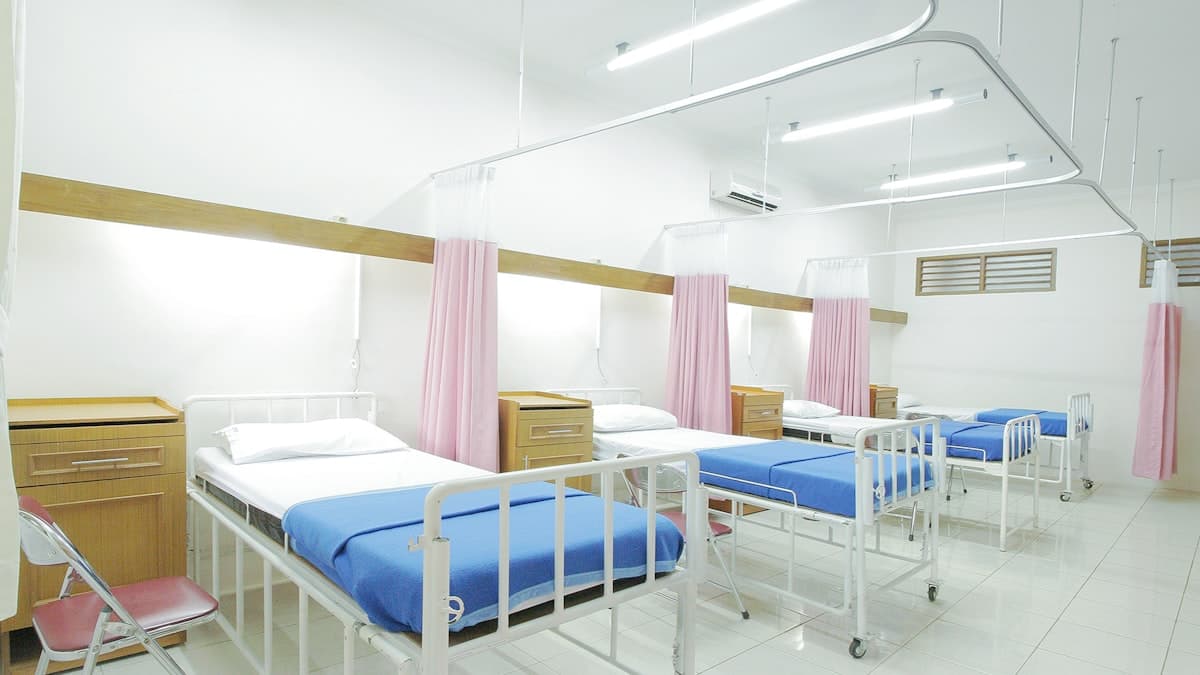
Walk into any major government or private hospital in Mumbai, Delhi, Kolkata, or Chennai during peak hours, and you will witness a familiar scene: patients on stretchers in corridors, families anxiously waiting for bed allocation, and harried staff trying to coordinate admissions on WhatsApp groups and paper registers.
Poor bed management is not just an inconvenience -- it is a financial and clinical crisis. A 200-bed hospital with an average daily rate of INR 3,000 per bed that operates at 70% occupancy instead of an achievable 85% is leaving approximately INR 32.85 lakh on the table every month. Beyond revenue, delayed bed allocation leads to longer emergency department stays, higher patient dissatisfaction, and in critical cases, adverse clinical outcomes.
A dedicated bed management system (BMS) addresses these challenges by providing real-time visibility into bed availability, automating allocation workflows, and integrating with discharge planning to keep the cycle moving efficiently.
What Is a Bed Management System?
A bed management system is a software module -- typically part of a broader hospital management system -- that tracks the real-time status of every bed in a hospital. It provides a centralized view of which beds are occupied, which are vacant, which are being cleaned, and which are reserved.
Beyond simple tracking, a modern BMS includes workflow automation for bed requests, allocation rules based on clinical priority, automated housekeeping alerts, and analytics dashboards that help administrators optimize bed utilization across departments.
Core Features of an Effective Bed Management System
Real-Time Bed Status Dashboard
The heart of any BMS is a visual dashboard that shows the status of every bed across all wards, floors, and units. Common status categories include:
- Occupied: Patient currently assigned
- Vacant - Clean: Ready for next patient
- Vacant - Dirty: Patient discharged, awaiting housekeeping
- Reserved: Held for incoming admission or transfer
- Under Maintenance: Temporarily unavailable
- Blocked: Quarantine or other administrative hold
This dashboard should be accessible on desktops at nursing stations and on mobile devices for administrators and bed managers. Colour coding makes status identification instant -- green for available, red for occupied, yellow for cleaning in progress.
Automated Bed Allocation Engine
Manual bed allocation is prone to favouritism, errors, and delays. An automated allocation engine uses configurable rules to assign beds based on:
- Clinical priority (emergency vs. elective)
- Ward preference and patient category (general, semi-private, private, ICU)
- Gender-appropriate allocation
- Proximity to nursing station for high-risk patients
- Insurance or scheme requirements (AB-PMJAY beds, CGHS beds)
The system can maintain a queue of pending bed requests and automatically allocate beds as they become available, sending notifications to the requesting department.
Discharge Planning Integration
Bed availability is directly tied to discharge efficiency. A BMS should integrate with discharge planning to:
- Display estimated discharge dates and times for currently occupied beds
- Send automated reminders to treating doctors when patients have met discharge criteria
- Alert housekeeping teams the moment a discharge order is signed
- Track the time between discharge order and bed availability (turnaround time)
Hospitals in Bengaluru and Hyderabad that have implemented discharge-integrated BMS report turnaround time reductions from 4-6 hours to 1-2 hours.
Housekeeping Workflow Management
The gap between a patient leaving and the next patient being placed often depends entirely on housekeeping speed. A BMS should:
- Automatically notify housekeeping staff (via app or SMS) when a bed needs cleaning
- Allow housekeeping to update bed status once cleaning is complete
- Track average cleaning times by ward and shift
- Escalate delayed turnarounds to supervisors
Transfer and Swap Management
Patients often need to be transferred between wards -- from ICU to step-down, from emergency to a regular ward, or between rooms based on changing clinical needs. The BMS should handle transfers without losing billing continuity or creating duplicate records.
Benefits of Implementing a Bed Management System
Improved Occupancy Rates
The most direct benefit is improved bed occupancy. By reducing the time a bed sits empty between patients, hospitals can admit more patients without adding physical infrastructure. A hospital in Pune documented a 12% improvement in occupancy within six months of BMS implementation, translating to approximately INR 20 lakh in additional monthly revenue.
Reduced Patient Wait Times
When bed availability is visible in real time, the emergency department and OPD can make faster admission decisions. Patients spend less time waiting in corridors or emergency bays, which improves both clinical outcomes and patient satisfaction scores.
Better Resource Planning
Bed occupancy data, when analysed over time, provides powerful insights for capacity planning. Hospital administrators can identify:
- Peak admission days and hours
- Wards with consistently high or low occupancy
- Seasonal trends (monsoon-related admissions, festival period dips)
- Average length of stay by department and diagnosis
These insights inform staffing decisions, equipment placement, and even infrastructure expansion plans. The healthcare analytics platform from GoMeds AI can transform raw bed data into actionable intelligence.
Compliance and Reporting
Accreditation bodies like NABH (National Accreditation Board for Hospitals and Healthcare Providers) require hospitals to track and report bed utilization metrics. A BMS generates these reports automatically, saving hours of manual data compilation during accreditation surveys.
Bed Management Challenges Specific to Indian Hospitals
High Patient Volume with Limited Infrastructure
Many Indian hospitals operate at or near 100% occupancy, particularly government and trust hospitals in metropolitan areas. In such environments, the BMS must manage not just beds but also waiting lists, priority queues, and overflow protocols.
Multi-Category Bed Configurations
Indian hospitals typically offer multiple bed categories -- general ward (INR 500-1,500/day), semi-private (INR 1,500-3,500/day), private (INR 3,500-8,000/day), and deluxe/suite (INR 8,000-25,000/day). The BMS must manage availability across these categories and handle upgrade/downgrade requests based on availability and patient willingness to pay.
Scheme and Government Quota Beds
Hospitals participating in Ayushman Bharat, state health insurance schemes, or EWS (Economically Weaker Sections) quota are required to reserve a certain percentage of beds. The BMS must track these reservations separately and ensure compliance with quota requirements while maximizing overall utilization.
Attendant and Visitor Management
In Indian hospitals, patients typically have one or more family members staying with them, especially in general wards. The BMS should account for attendant accommodations and, in some facilities, manage attendant passes and meal arrangements.
Implementation Guide for Indian Hospitals
Step 1: Baseline Assessment
Before implementing a BMS, conduct a two-week baseline assessment:
- Count total beds by ward and category
- Record current occupancy rates by day of week
- Measure average time from discharge order to bed readiness
- Document current bed allocation workflow and decision-makers
- Identify bottlenecks (housekeeping delays, late discharges, etc.)
Step 2: System Configuration
Configure the BMS to match your hospital's physical layout:
- Map every bed with its ward, floor, wing, and category
- Define bed allocation rules and priority levels
- Set up user roles (bed manager, nursing station, housekeeping, admin)
- Configure notification channels (app push notifications, SMS, email)
- Integrate with admission, discharge, and billing modules
Step 3: Pilot in One Ward
Start with a single ward -- ideally one with moderate volume and cooperative staff. Run the BMS alongside existing processes for two weeks, identify issues, and refine workflows before expanding to other wards.
Step 4: Full Rollout with Training
Roll out ward by ward over 4-8 weeks. Provide hands-on training to:
- Nursing staff (bed status updates, transfer requests)
- Admission counter staff (bed search, reservation)
- Housekeeping supervisors (cleaning workflow, status updates)
- Bed managers and administrators (dashboard, reports, escalations)
Step 5: Monitor and Optimise
Track key metrics weekly for the first three months:
- Average bed turnaround time
- Occupancy rate by ward and category
- Bed request to allocation time
- Housekeeping response time
- Patient complaints related to bed allocation
How GoMeds AI Transforms Bed Management
GoMeds AI's hospital management system includes an intelligent bed management module designed for the realities of Indian hospital operations:
- AI-Powered Demand Prediction: Analyses historical admission patterns to predict bed demand for the coming 24-72 hours, allowing proactive discharge planning
- Smart Allocation Engine: Considers clinical acuity, patient preferences, insurance requirements, and quota obligations to make optimal bed assignments
- Real-Time Visual Dashboard: Intuitive colour-coded floor maps accessible on desktop and mobile
- Integrated Housekeeping Workflow: Automated notifications with SLA tracking and escalation
- NABH-Ready Reports: Pre-built report templates aligned with NABH accreditation requirements
Hospitals across Ahmedabad, Jaipur, Lucknow, and Kochi are already using GoMeds AI to improve their bed utilization by 10-18%.
Schedule a demo to see how GoMeds AI can help your hospital make every bed count.
Frequently Asked Questions
What is the ideal bed occupancy rate for Indian hospitals?
The ideal bed occupancy rate for Indian hospitals is generally considered to be between 80% and 90%. Below 80% suggests underutilization of resources, while sustained rates above 90% can lead to quality and safety concerns, including inability to handle emergency admissions and increased infection risk. A bed management system helps hospitals maintain occupancy in this optimal range.
How long does it take to implement a bed management system?
For a mid-size hospital with 100-200 beds, a typical BMS implementation takes 6-10 weeks from configuration to full rollout. This includes 1-2 weeks for baseline assessment, 1-2 weeks for system configuration, 2-3 weeks for pilot testing, and 2-3 weeks for phased rollout. Larger hospitals or those with complex multi-site operations may require 3-4 months.
Can a bed management system reduce patient wait times in the emergency department?
Yes, significantly. When emergency department staff can see real-time bed availability across all wards, they can initiate admission and bed allocation immediately rather than making phone calls or sending runners to check. Hospitals that have implemented BMS report 30-50% reduction in ED boarding time -- the period a patient spends in the ED waiting for an inpatient bed.
Does a bed management system integrate with hospital billing?
A well-designed BMS integrates seamlessly with hospital billing software. When a patient is assigned a bed, the appropriate room charges begin automatically. When a patient is transferred to a different category bed, the charges adjust accordingly. At discharge, the bed charges are automatically included in the final bill. This integration eliminates manual charge entry and reduces billing errors.
What is the cost of bed management software for Indian hospitals?
Bed management is typically included as a module within a comprehensive hospital management system rather than sold standalone. For cloud-based HMS solutions, annual costs range from INR 30,000-60,000 for small hospitals to INR 2-5 lakh for mid-size hospitals. Enterprise deployments for large hospital chains may cost INR 5-15 lakh annually. Visit our pricing page for detailed information.
Tags
Written by GoMeds AI Team
Published on 25 January 2026